6 Requirements Automotive Manufacturers Expect From Local CNC Services
Key Takeaways
- Manufacturers prioritise proximity when selecting CNC services nearby to reduce delays and keep development timelines on track.
- Consistency in tolerance across large production volumes directly affects assembly reliability and reduces costly disruptions.
- Material capability has expanded, requiring local shops to work confidently with lightweight alloys and engineered plastics.
Introduction
The selection of a machining partner has become a strategic decision tied directly to production risk management. When manufacturers search for “CNC services near me”, they are looking for more than just machine availability or a competitive quote. The modern automotive sector operates on razor-thin margins and compressed lead times, where a minor inconsistency in a single bracket or housing can halt an entire assembly line. Consequently, CNC machining for the automotive industry demands a rigorous level of process control that reflects how tightly each component must integrate into complex vehicle systems. Local suppliers must demonstrate a robust infrastructure and a culture of precision before they are entrusted with high-stakes production contracts. These six requirements represent the baseline expectations that global automotive brands place upon their regional engineering partners.
1. Achieving Rapid Prototyping Turnaround
Speed is the primary factor influencing early-stage vehicle development, especially as manufacturers race to launch new electric and autonomous models. Engineers rely on nearby providers of CNC services to move seamlessly from digital CAD designs to physical validation units within days rather than weeks. This proximity allows for immediate hands-on adjustments and iterative testing without the extended downtime associated with international shipping. A supplier that can translate complex design intent into a finished prototype within a compressed window significantly reduces friction across the entire R&D lifecycle.
2. Ensuring High-Volume Repeatability
The long-term viability of a supplier is defined by their ability to maintain production stability beyond the initial sample batch. Successful CNC machining for the automotive industry requires the output of thousands of identical units where dimensional drift is virtually non-existent. Manufacturers scrutinise a shop’s ability to maintain tool paths and spindle speeds across extended runs to ensure that the ten-thousandth part is identical to the first. Small variations that might be acceptable in other sectors can accumulate into significant operational issues during automated vehicle assembly.
3. Strict Adherence to GD&T Standards
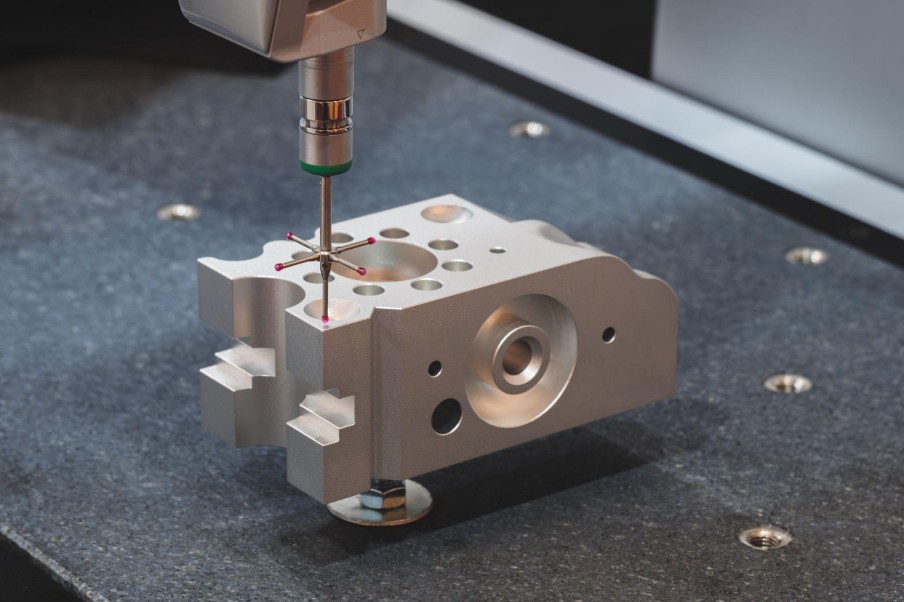
Modern automotive systems are defined by the precise relationships between multiple moving parts rather than individual dimensions in isolation. Suppliers must demonstrate a sophisticated ability to interpret Geometric Dimensioning and Tolerancing (GD&T) to ensure that every hole, plane, and cylinder aligns with its functional requirement. When evaluating CNC services in a local hub, manufacturers look for engineering teams that understand how a part behaves under real-world mechanical stress. Adhering to these complex geometric symbols ensures that components fit perfectly during the final assembly, regardless of which production lot they originated from.
4. Comprehensive PPAP Capability and Documentation
Quality assurance in 2026 extends far beyond a simple final inspection into the realm of documented process stability. Automotive clients expect their partners to follow the Production Part Approval Process (PPAP), providing structured evidence that every CNC machine for automotive industry applications can consistently meet design requirements. This documentation includes material certifications, failure mode and effects analysis, and statistical process control charts that offer a transparent view of the production run. Such a requirement reflects a shift toward data-driven decision-making, where manufacturers rely on measurable reliability to mitigate potential recall risks.
5. Expertise in Lightweighting and Advanced Materials
As vehicle efficiency targets become more stringent, the industry has pivoted toward lightweight alloys and engineered composites that present unique machining challenges. Local CNC service providers are increasingly evaluated on their ability to handle thinner-walled structures and temperamental materials like titanium or carbon-fibre-reinforced plastics. Machining these materials requires specialised tooling and cooling techniques to prevent warping or structural compromise during the removal of metal. Expertise in lightweighting supports the broader design goal of increasing vehicle range and performance without sacrificing the safety or integrity of the chassis.
6. Access to Localised Support and Troubleshooting
Physical proximity remains a vital asset when unforeseen technical issues arise during a production cycle. Manufacturers often prefer to source CNC services locally because direct access allows for the rapid resolution of fit or tolerance concerns through face-to-face engineering consultations. A supplier that can send a technician to the assembly plant within hours to investigate a mounting issue can save a manufacturer millions in potential downtime. This practical advantage strengthens the collaborative bond between the OEM engineering teams and their machining partners.
Conclusion
Selecting the right engineering partner involves looking past a simple list of equipment to find an alignment in quality culture, and responsiveness. Manufacturers require a machining service that understands the systemic importance of every bolt, casing, and gear within the vehicle’s architecture. CNC machining for the automotive industry is a discipline of narrow margins and high expectations, where reliability is the only acceptable outcome. By choosing to work with specialised services within their own region, automotive brands secure a more resilient and transparent supply chain.
Contact Disk Precision Group today to evaluate CNC machining capabilities that align with your specific automotive production requirements.